


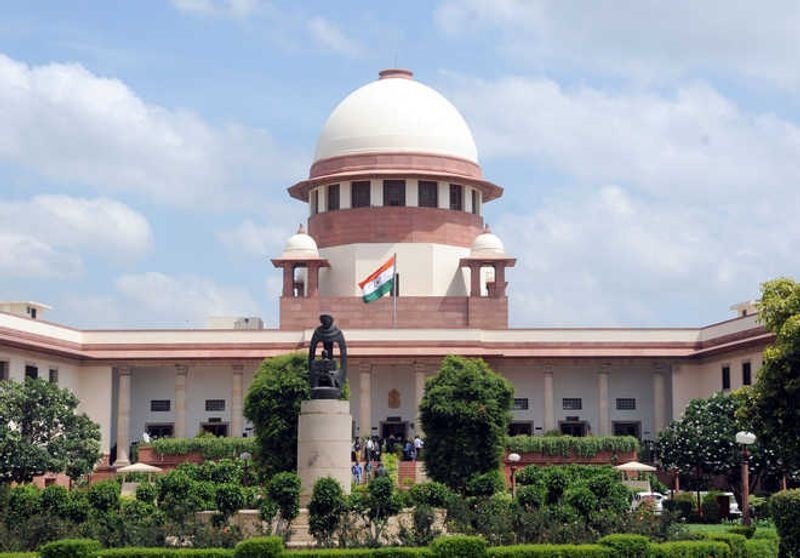
NEW DELHI, May 8: In a major step aimed at ensuring speedy justice in terrorism and organised crime cases, the Supreme Court of India on Friday directed the establishment of exclusive special courts for the expeditious trial of cases investigated by the National Investigation Agency (NIA).

A Bench comprising Chief Justice Surya Kant and Justice Joymalya Bagchi issued a series of significant directions while hearing the suo motu matter titled ‘In Re: Creation of Special Exclusive Courts’.
The apex court directed the Central Government to establish at least one exclusive special court for every 10 to 15 pending NIA trials within a month. In cases where pending trials exceed 15, two special courts are to be constituted.
Invoking Section 11 of the National Investigation Agency Act, 2008, the Bench asked the Centre to consult the Chief Justices of respective High Courts for the constitution of dedicated courts exclusively meant for NIA cases.
The Court further requested Chief Justices of High Courts to coordinate with State Governments for providing adequate infrastructure, including courtrooms and necessary facilities, to operationalise these special courts without delay.
Importantly, the Bench clarified that no other categories of cases shall be assigned to these courts, ensuring uninterrupted and day-to-day hearings of NIA matters. The judges presiding over these courts have been granted flexibility in scheduling proceedings, with an emphasis on concluding at least one trial every month.
The Supreme Court also addressed cases prosecuted by State Governments under Section 22 of the NIA Act, which empowers states to establish special courts. Advocate Generals across states, in consultation with High Court Registrars General, have been directed to furnish updated details of pending trials in their jurisdictions.
The matter has now been listed for further hearing in July.
Earlier, during hearings on April 20 and March 24, the apex court had expanded the scope of the proceedings to include cases under the Unlawful Activities (Prevention) Act and the Narcotic Drugs and Psychotropic Substances Act, irrespective of whether investigations were conducted by central agencies such as the NIA and the Narcotics Control Bureau (NCB) or by state agencies.
The Court had also asked the Centre to consider allocating ₹1 crore per court for establishing special exclusive courts across States and Union Territories to ensure swift prosecution of UAPA and NDPS cases.
Highlighting the importance of timely justice, the Bench observed that early disposal of cases would help balance the rights of both the accused and victims, while strengthening public confidence in the criminal justice system.
The suo motu proceedings were initiated after serious concerns were raised over prolonged delays in NIA trials, with several sensitive terror-related cases remaining pending for years.