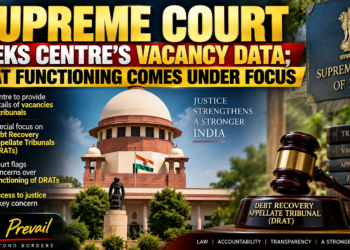


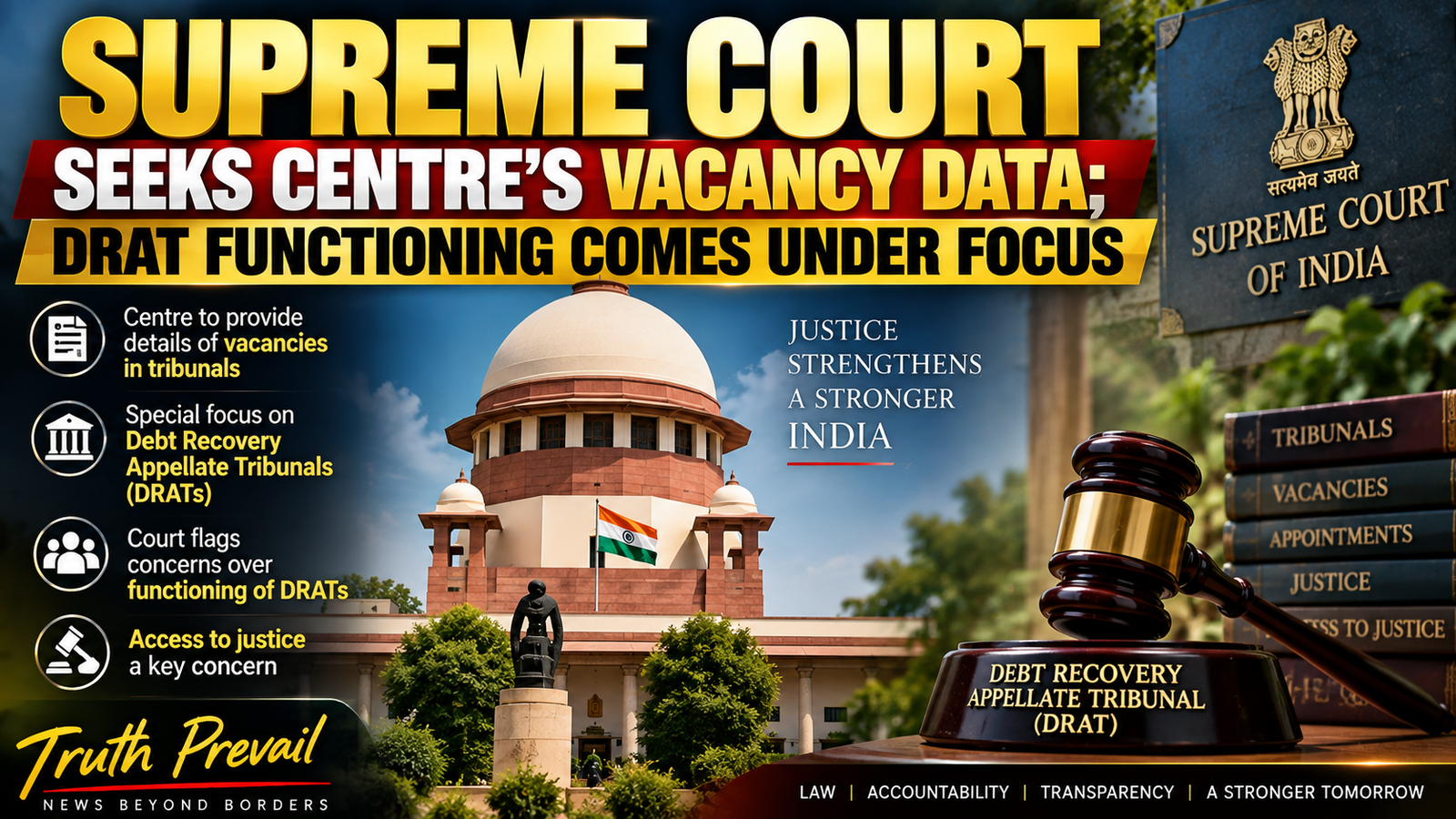
New Delhi | September 21, 2026 ; The Supreme Court has directed the Centre to furnish updated information on vacancies across tribunals, with particular attention to the Debt Recovery Appellate Tribunals (DRATs), amid concerns that staff shortages could affect the functioning of these quasi-judicial bodies.

A bench headed by Chief Justice Surya Kant, along with Justices Joymalya Bagchi and V. Mohana, was considering several petitions concerning vacancies caused by retirements and upcoming superannuation of tribunal presiding officers and members.
During the hearing, the court was informed that some DRATs were experiencing operational difficulties. The bench therefore asked Additional Solicitor General Aishwarya Bhati, representing the Centre, to submit detailed information about the DRATs by September 25, 2026.
The court emphasised that the central concern was access to justice, while making it clear that tribunal members do not possess an automatic entitlement to an extension of their tenure.
Vacancy Figures Before the Court
The Centre informed the bench that approximately 90 posts are vacant across various tribunals, while the Search-cum-Selection Committee (SCSC) is currently processing appointments for 81 of those vacancies.
The petitions have also sought arrangements under which retiring presiding officers and members could remain in position until replacements are appointed, thereby avoiding interruptions in the functioning of tribunals.
The Supreme Court has previously stressed that tribunals should not become non-functional simply because appointments to vacant positions are delayed.
NGT Posts Also Raise Concern
The bench separately considered the position in the National Green Tribunal (NGT), where three members—two judicial members and one technical member—were due to leave office.
The court noted that their departure could affect the NGT’s functioning and, as an interim arrangement, extended their tenure until replacements are appointed.
For other tribunals, the bench directed the Centre to proceed with appointments under the applicable provisions of the Tribunal Reforms Act, 2026 without unnecessary delay.
248 Members Eligible for Extension
The proceedings also referred to information supplied by the government on September 8, when the Centre said that 248 members of different tribunals had been found eligible for extension under the Tribunal Reforms Act, 2026.
The government’s position is that those eligible members can remain in office until they complete the five-year tenure prescribed by the new law or reach the relevant maximum age limit.
The question of extensions has been under consideration against the backdrop of the Supreme Court’s May 19, 2026 order. At that time, the court extended the tenure of tribunal chairpersons, presidents and members whose terms were due to expire before September 8, with the objective of preventing disruption in tribunal operations.
Centre Says Appointment Process Is Underway
Attorney General R. Venkataramani had earlier informed the bench that the government had already initiated the process of making fresh appointments and had opposed requests seeking general ad hoc extensions.
The government has maintained that appointments should proceed under the new legal framework, while eligible members would receive extensions in accordance with the applicable provisions.
The latest direction from the Supreme Court places renewed emphasis on filling vacant tribunal posts, particularly where shortages could affect the ability of litigants to obtain timely decisions.
The court is expected to consider the matter further after receiving the Centre’s requested DRAT information on September 25, 2026.