

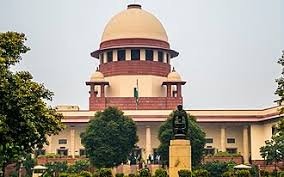
New Delhi, August 27, 2026 : The Supreme Court is scheduled to hear on August 31, 2026, a significant plea challenging the validity of a provision in the Income Tax Act, 1961, that permits political parties to receive cash donations of less than ₹2,000.

According to the Supreme Court’s cause list, the matter will come up before a bench comprising Justice Vikram Nath and Justice Sandeep Mehta.
Plea Challenges Cash Donation Provision
The petition, filed by Khem Singh Bhati, challenges Clause (d) of Section 13A of the Income Tax Act, arguing that permitting political parties to accept anonymous cash contributions below ₹2,000 undermines transparency in political funding and affects the integrity of the electoral process.
The petitioner contends that voters have a fundamental right to know the sources of political funding, including the identities of donors, so they can make an informed decision while exercising their franchise.
The Supreme Court had agreed to examine the plea on November 24, 2025, when it sought responses from the Centre and other parties concerned.
Demand for Complete Transparency
The petition seeks a direction that political parties should disclose the name and complete particulars of every person making a monetary contribution, while no political party should be permitted to accept donations in cash.
It also asks the court to direct the Election Commission to make the prohibition on cash donations a condition for the registration of political parties and allotment of election symbols.
The petitioner has argued that the existing provision creates a transparency gap because cash contributions below the prescribed threshold can effectively remain anonymous.
Election Commission Role Under Scrutiny
The plea has also sought directions to the Election Commission to scrutinise Form 24A contribution reports submitted by recognised political parties.
It proposes that political parties should be required to deposit or otherwise account for contributions where the donor’s address or PAN details have not been provided.
The petition further seeks action against political parties that fail to submit complete contribution reports within the prescribed period, including proceedings under the Election Symbols (Reservation and Allotment) Order, 1968.
The petitioner has sought directions for the Election Commission to issue notices to defaulting parties and examine whether their reserved election symbols should be suspended or withdrawn for persistent non-compliance.
CBDT Audit and Tax Compliance
Another major prayer in the petition concerns the Central Board of Direct Taxes (CBDT).
The petitioner has sought scrutiny of the income-tax returns and audit reports filed by political parties over the preceding five years.
It has further sought appropriate proceedings for taxation, penalties and prosecution wherever political parties are found to have failed to comply with the requirements of Section 13A of the Income Tax Act read with Section 29C of the Representation of the People Act, 1951.
Section 29C deals with the declaration of donations received by political parties.
Fundamental Right to Information
A central argument in the petition is that voters’ right to information under Article 19(1)(a) of the Constitution is affected when political funding sources remain undisclosed.
The plea argues that allowing anonymous cash donations below ₹2,000 deprives citizens of information that may be relevant to assessing the financial interests and motivations behind political parties and their funding.
Reference to Electoral Bonds Verdict
The petition also relies on the Supreme Court’s 2024 judgment striking down the electoral bonds scheme, drawing a connection between transparency in political funding and voters’ constitutional right to information.
The electoral bonds scheme had been introduced in 2018 as a mechanism for political donations and was presented as an alternative to cash contributions.
The Supreme Court’s forthcoming hearing will therefore be closely watched for its potential implications for political funding, disclosure requirements, electoral transparency and the accountability of political parties.
The August 31 hearing could determine whether the existing legal framework governing small cash donations requires greater disclosure safeguards or further regulatory intervention.