

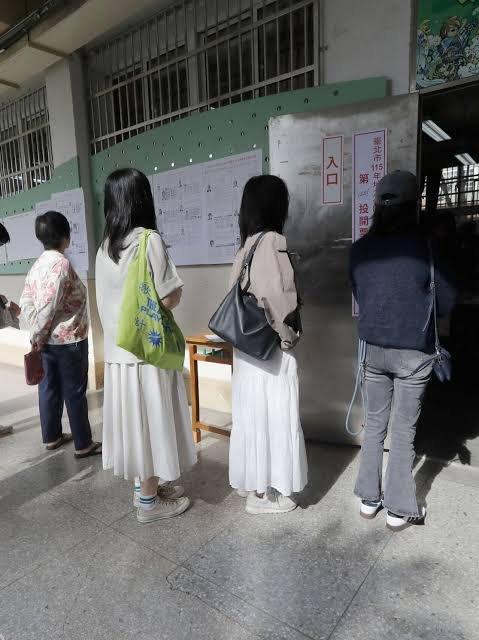
TAIPEI, November 28, 2026 : Taiwan is voting to elect mayors, city and county council members, and other local leaders across its 22 cities and counties in elections that could provide a crucial test of the ruling Democratic Progressive Party’s (DPP) political strength at the local level.

Polling stations opened at 8 a.m. on Saturday and are scheduled to close at 4 p.m. Results are normally counted and announced on the same day, with the elected representatives set to serve four-year terms.
Although the elections primarily focus on local governance and everyday concerns, the vote is unfolding against the backdrop of rising tensions between Taiwan and China.
Local Issues Dominate the Election Campaign
Unlike Taiwan’s presidential elections, which are heavily influenced by relations with Beijing and questions surrounding the island’s security, the local polls are focused largely on issues affecting residents’ daily lives.
Social welfare benefits, municipal services and local development are among the concerns shaping the campaign. Nevertheless, cross-strait relations and allegations of foreign interference have remained part of the wider political debate.
Taiwan’s authorities have accused Beijing of attempting to undermine public confidence in the island’s electoral system. Chinese authorities have rejected such allegations.
Chinese Military Activity Draws Attention
Taiwan’s Ministry of National Defense reported detecting approximately 33 sorties by Chinese People’s Liberation Army aircraft between Friday and Saturday. The aircraft reportedly included fighter jets and bombers operating in the direction of Taiwan.
The reported activity adds to the security concerns surrounding the election, although the immediate contest is primarily about local leadership and governance.
Taiwan is a self-governed democracy, while Beijing claims the island as part of China. The differing positions remain a central source of tension across the Taiwan Strait.
DPP Faces a Tough Local Election Test
The main contest is between candidates from the ruling Democratic Progressive Party and the opposition Kuomintang (KMT), also known as the Nationalist Party.
The KMT has traditionally performed strongly in local elections. In the 2022 local polls, the DPP won in only five of Taiwan’s 22 localities, highlighting the ruling party’s challenges in translating its national political position into local electoral victories.
President Lai Ching-te has actively campaigned for DPP candidates. On Thursday night, he appeared in support of his party’s mayoral candidate in Taoyuan City as the campaign entered its final phase.
Taipei Race Among the Key Contests
Taipei, Taiwan’s capital, has traditionally been a KMT stronghold. However, the DPP’s mayoral candidate, Puma Shen, has emerged as a strong challenger to incumbent Mayor Chiang Wan-an, according to the supplied report.
The campaign featured contrasting public rallies and outreach efforts. Shen travelled through the city in a motorcade, stopping at designated locations to greet supporters gathered along the streets.
Chiang, meanwhile, held a nighttime rally alongside KMT city council members, with supporters waving balloons, flags and illuminated sticks.
The races in New Taipei City and Kaohsiung are also attracting attention. New Taipei City is currently led by a KMT mayor, while Kaohsiung’s mayoral office is held by the DPP.
Third Party Adds to the Political Contest
The Taiwan People’s Party is contesting selected smaller races and has backed the KMT’s candidate in the Taipei mayoral contest.
Campaign banners and rallies have been prominent across the capital, with candidates making final efforts to mobilise voters before polling stations close.
Authorities Warn Against Disinformation
Ahead of voting, Taiwan’s government urged the public to remain alert to potentially false claims circulating on social media, citing concerns about continued Chinese disinformation efforts.
The election therefore carries significance beyond municipal leadership, testing political support for the major parties while drawing attention to Taiwan’s electoral resilience amid persistent cross-strait tensions.
The results are expected to clarify the balance of local political power for the next four years and provide an indication of the ruling party’s ability to strengthen its position ahead of future electoral contests.
Truth Prevail — Bringing You the Headlines That Matter!