


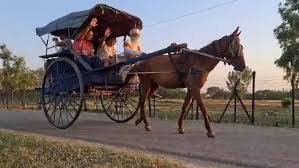
JAMMU, May 18, 2026 : Traditional horse-driven tongas, once a primary mode of transport in the border areas of Jammu, are witnessing renewed popularity in the R S Pura sector following Prime Minister Narendra Modi’s appeal for fuel conservation.

The eco-friendly mode of transport, which historically connected Jammu and Sialkot before Independence, has survived in parts of the R S Pura border belt for more than seven decades. Today, both locals and tourists are increasingly opting for tonga rides for short-distance travel and as part of the growing attraction of border tourism.
“We have been running tongas here for decades. Before 1947, people used to travel from Sialkot to Jammu in tongas. Over the years, this tradition went out of fashion, but now, after the Prime Minister’s appeal, locals are once again using tongas for short-distance movement in villages,” said traditional tanga operator Teja Singh.
He added that tanga operators continue to gather in the area every Saturday and Sunday in an effort to preserve the long-standing tradition.
Another operator, Rattan Singh, said the renewed interest in tongas reflects the growing awareness around fuel conservation and environmentally friendly alternatives.
“From Zero Line to R S Pura, people use tongas for commuting. Earlier, people depended more on fuel-powered vehicles, but now, with the emphasis on saving fuel, tongas have started running again. Horse-driven tongas do not require fuel, so people are considering them a better option,” he said.
The revival comes amid broader efforts across the country to reduce fuel consumption through awareness campaigns, reduced vehicle use and promotion of sustainable transport alternatives.
Tourists visiting the border belt also welcomed the return of the traditional mode of transport, describing it as both environmentally friendly and culturally significant.
A group of visitors — Davain, Dharmi, Lacha Patel, Rahi and Pavitra — said tonga rides not only help conserve fuel but also offer visitors a glimpse into the region’s heritage and rural lifestyle.
“Such traditional modes of transport help in conserving fuel. Arrangements like tongas are not only better for the environment but also keep our traditions alive. Such rides should be promoted in tourism and border areas,” said Rahi.
The tourists further said that riding a tonga reconnects people with their cultural roots and highlights the traditional bond between humans and animals while promoting sustainable travel.
“A tonga ride is not just a means of travel, but also a part of our old cultural identity. Modern technology has its own place, but it is equally important to preserve our culture and traditions,” they added.