


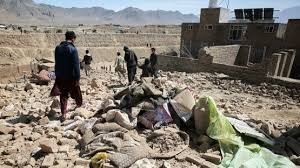
KABUL, June 10, 2026 : Regional tensions between Afghanistan and Pakistan intensified on Wednesday after Afghan authorities accused Pakistan of carrying out fresh airstrikes inside Afghan territory, resulting in multiple civilian casualties, including children.

According to Afghan officials, the strikes targeted areas in eastern Afghanistan and left at least 13 people dead and 14 others injured, further deepening a conflict that has already claimed hundreds of lives in recent months.
Afghan Authorities Report Civilian Casualties
Taliban government spokesperson Zabihullah Mujahid stated that the airstrikes hit locations in the provinces of Khost, Kunar, and Paktika.
According to Afghan officials, those killed included:
- 11 children
- 1 woman
- 1 elderly man
Authorities also reported that 14 individuals sustained injuries during the attacks.
The claims regarding casualties have not been independently verified, and Pakistan had not immediately issued an official response regarding the allegations at the time of reporting.
Airstrikes Follow Deadly Border Attack
The reported strikes came a day after a major militant attack on a security checkpoint in Pakistan’s northwestern Khyber Pakhtunkhwa province near the Afghan border.
According to Pakistan’s Interior Ministry, suspected militants linked to the Tehrik-e-Taliban Pakistan (TTP) launched an assault on a security post in the Hasan Khel area, triggering a fierce exchange of fire.
The attack resulted in:
- Six members of Pakistan’s Federal Constabulary being killed.
- Several security personnel being injured.
- Eight attackers reportedly killed during the operation.
Pakistani authorities stated that security forces successfully prevented militants from overrunning the checkpoint.
Pakistan Vows Intensified Anti-Militancy Operations
Following the attack, Pakistan’s Interior Minister Mohsin Naqvi attended funeral prayers for the slain security personnel in Peshawar.
The minister paid tribute to the deceased officers and reaffirmed Pakistan’s commitment to combating militancy and strengthening national security.
Officials stated that operations against armed groups threatening peace and stability would continue with greater intensity.
Months of Escalating Conflict
Relations between Afghanistan and Pakistan have deteriorated significantly in recent months, with repeated allegations of cross-border attacks and military operations.
The latest accusations form part of a broader cycle of hostilities that intensified earlier this year following military actions by both sides along the border.
Since February 2026, both countries have exchanged accusations regarding attacks, airstrikes, and support for militant activities operating near their shared frontier.
Dispute Over Previous Airstrikes
Afghanistan has previously accused Pakistan of conducting airstrikes that allegedly caused large-scale civilian casualties.
One of the most controversial incidents involved claims that Pakistani military action struck a drug-treatment facility in Kabul in March, resulting in hundreds of deaths.
Pakistan rejected those allegations, maintaining that its operations targeted militant infrastructure and ammunition depots rather than civilian facilities.
The differing accounts have further complicated diplomatic efforts aimed at reducing tensions between the two neighboring countries.
China’s Mediation Efforts
The renewed violence comes despite recent diplomatic initiatives aimed at easing tensions.
Earlier this year, China facilitated talks between Afghan and Pakistani representatives in Urumqi, seeking to promote dialogue and prevent further escalation.
Following the discussions, Chinese officials stated that both countries had agreed to pursue peaceful engagement and explore mechanisms to resolve disputes through diplomatic channels.
However, continuing security incidents suggest that significant challenges remain in achieving lasting stability along the border.
Militancy Remains Core Point of Contention
A central issue in the ongoing dispute is Pakistan’s allegation that militant groups operating against Pakistani interests are receiving support or sanctuary inside Afghanistan.
Islamabad has repeatedly accused Afghanistan of providing safe havens to members of the Tehrik-e-Taliban Pakistan (TTP), a militant organization responsible for numerous attacks inside Pakistan.
Afghan authorities have consistently denied those allegations and rejected claims of supporting or harboring anti-Pakistan militant groups.
Regional Stability Under Strain
The latest accusations and military developments underscore the fragile security situation along the Afghanistan-Pakistan border, one of the region’s most sensitive and volatile areas.
With both nations exchanging allegations and continuing security operations, international observers remain concerned about the potential for further escalation and its implications for regional peace, border security, and humanitarian conditions.
As diplomatic efforts continue, the international community is likely to closely monitor developments in hopes of preventing a broader deterioration in relations between the two neighboring countries.