

LONDON, June 22, 2026 : British Prime Minister Keir Starmer on Monday announced his resignation as both Prime Minister and Leader of the Labour Party, triggering a leadership contest that is expected to produce a new party leader and head of government before Parliament returns in September.

The 63-year-old leader said he would remain in office until a successor is elected, promising a smooth transition of power and his full support to the next Labour leader.
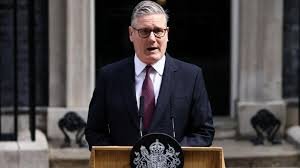
In an emotional address outside 10 Downing Street, Starmer acknowledged that members of his parliamentary party no longer believed he was the best person to lead Labour into the next general election.
“The question my party is asking now is whether I am best placed to lead us into the next general election. I have heard the answer of my parliamentary party to that question and I accept that answer with good grace,” Starmer said.
He confirmed that he had informed King Charles III of his decision earlier in the day and would ask Labour’s National Executive Committee to begin the process of selecting a new leader. Nominations are set to open on July 9, with the contest expected to conclude before Parliament’s summer recess.
Andy Burnham Emerges as Front-Runner
Former Greater Manchester Mayor and newly elected MP Andy Burnham has emerged as the leading contender to succeed Starmer. Burnham has already declared his intention to contest the leadership race and has received support from prominent Labour figures, including former Health Secretary Wes Streeting, who withdrew from the race and endorsed him.
If Burnham remains unopposed, he could become Prime Minister as early as mid-July. Otherwise, Labour members will vote on the party’s next leader before Parliament reconvenes in September.
End of a Short but Historic Premiership
Starmer led Labour to a landslide victory in the July 2024 General Election, ending 14 years of Conservative rule and securing one of the largest parliamentary majorities in modern British political history.
However, his popularity declined sharply in recent months amid internal party unrest, policy controversies, electoral setbacks, and growing criticism over the direction of his government. Pressure intensified following disappointing local election results and mounting calls within Labour for a change in leadership.
Emotional Farewell
Concluding his resignation speech, Starmer paid tribute to his family and reflected on his time in office.
“When I leave the biggest job in the country, I shall spend more time on the most important job — being the best husband I can to my wife Vic and the best dad I can to my children,” he said, becoming visibly emotional.
His resignation marks a significant turning point in British politics, with Labour now preparing for a leadership transition while continuing to govern with its parliamentary majority.