

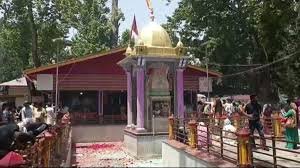
TULMULLA (GANDERBAL), June 22, 2026 : Amid the chanting of Vedic hymns, ringing temple bells and the sound of conch shells, thousands of devotees gathered at the historic Kheer Bhawani Shrine in Tulmulla on Sunday to celebrate Zeashta Ashtami, one of the most sacred festivals of the Kashmiri Pandit community.

The annual pilgrimage witnessed one of the largest turnouts in recent years, with devotees arriving from across India to offer prayers at the revered shrine of Mata Ragnya Bhagwati in central Kashmir’s Ganderbal district. For many displaced Kashmiri Pandits, however, the occasion was far more than a religious gathering—it was an emotional homecoming marked by memories, reunions, and renewed hopes of returning permanently to their homeland.
Thousands Gather for Sacred Festival
The festival commemorates the appearance day of Goddess Ragnya Bhagwati and is celebrated at several shrines dedicated to the deity across Kashmir, including Kheer Bhawani at Tulmulla, Tripur Sundari at Devsar, Ragnya Bhagwati at Manzgam, Loktipora and Tikker.
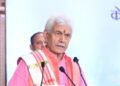
Lieutenant Governor Manoj Sinha, accompanied by senior civil and police officials, visited the shrine and participated in religious ceremonies and prayers.
Throughout the day, the shrine complex remained packed with devotees offering prayers, lighting earthen lamps, performing rituals, and participating in community feasts. Long queues were witnessed at the temple, yagya shala, and community kitchens as pilgrims thronged the sacred site.
Pilgrimage Becomes Emotional Return to Roots
For many members of the displaced Kashmiri Pandit community, the visit carried deep emotional significance.
Roopa, a 78-year-old devotee originally from Srinagar and now settled in Bengaluru, said she prayed for an end to the community’s decades-long displacement and hoped to spend her final years in Kashmir.
Similar sentiments were echoed by Prem Nath, a native of Kilam village in South Kashmir who now resides in Mumbai.
“We prayed collectively for the return of our community to its homeland in a safe and secure environment,” he said.
Renewed Demand for Dignified Rehabilitation
Several devotees and community leaders reiterated their long-standing demand for a secure and dignified return of Kashmiri Pandits to the Valley.
Rattan Lal Zutshi, President of the Kulvagishori Temple Association, urged authorities to take concrete steps toward rehabilitation.
“We want immediate measures for establishing a secure township and facilitating the dignified return of Kashmiri Pandits to the Valley,” he said.
Vikas Raina, whose father Ashok Kumar Raina was killed by terrorists, expressed hope that the Central Government would address the community’s concerns.
“We continue to look towards the country’s leadership for a lasting solution that ensures safety, dignity and permanent rehabilitation of displaced Kashmiri Pandits,” he said.
Heartwarming Reunions Rekindle Shared Memories
One of the most moving aspects of the festival was the reunion of displaced Kashmiri Pandits with their former neighbours and friends.
Emotional scenes unfolded as local Muslims warmly welcomed visiting Pandits, reviving memories of shared lives and centuries-old traditions of coexistence.
Among them was Shabir Ahmad Dar from Budgam, who reunited with his childhood friend Deepak, now settled in the United States, after 36 years.
“This is his first visit after many years, and our reunion came after 36 years,” Dar said, recalling childhood memories and life in Kashmir before the migration of Pandits from the Valley.
Similar reunions were witnessed throughout the shrine complex, with members of both communities exchanging greetings, sharing memories, and expressing hope for a peaceful future.
Symbol of Kashmir’s Shared Heritage
The sight of Kashmiri Muslims and Pandits embracing each other drew attention from pilgrims and visitors alike, reflecting the enduring spirit of Kashmiriyat, communal harmony, and brotherhood that has long defined the region’s social fabric.
Several political leaders also visited the shrine during the celebrations and interacted with devotees. Former Jammu and Kashmir Chief Minister Mehbooba Mufti was among those who paid obeisance and greeted pilgrims.
As Zeashta Ashtami concluded, the festival once again emerged not only as a major religious event but also as a powerful symbol of remembrance, reconciliation, cultural identity, and the enduring hope of return for the displaced Kashmiri Pandit community.