

NEW DELHI, 📅 July 27, 2026 : In a major move aimed at restoring trust in India’s examination system, Prime Minister Narendra Modi has announced the formation of a high-powered six-member task force to recommend comprehensive reforms that will make examinations leakproof, transparent, secure, and technology-driven.

The panel is headed by Infosys co-founder Nandan Nilekani and brings together experts from technology, education, national security, space science, and public administration to address recurring concerns over question paper leaks and examination integrity.
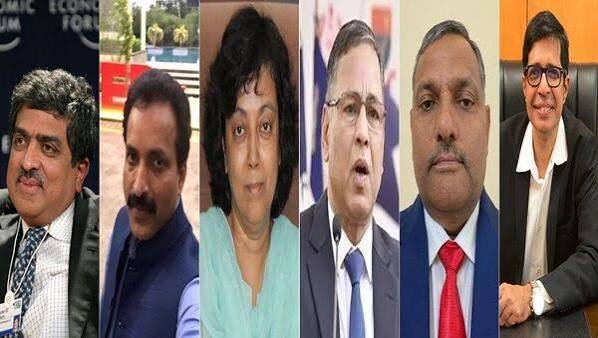
Meet the Six Members of the Exam Reform Task Force
1. Nandan Nilekani – Chairman
Infosys co-founder and former Chairman of UIDAI, Nandan Nilekani is widely regarded as the architect of India’s Aadhaar digital identity system and one of the key visionaries behind the Unified Payments Interface (UPI). Since co-founding Infosys in 1981 alongside N.R. Narayana Murthy and others, Nilekani has played a pivotal role in shaping India’s digital public infrastructure.
Role in the Task Force:
He will lead the committee in recommending advanced technological solutions to create a secure, transparent, and efficient examination ecosystem.
2. Dr. S. Somanath – Space Scientist
Former Chairman of the Indian Space Research Organisation (ISRO) and Secretary of the Department of Space (2022–2025), Dr. S. Somanath is an accomplished aerospace engineer. He studied at the Indian Institute of Science (IISc), Bengaluru, and later earned his PhD from IIT Madras.
Role in the Task Force:
He will contribute expertise in designing and managing large-scale, high-reliability technology systems.
3. Tapan Deka – Security Expert
A 1988-batch IPS officer of the Himachal Pradesh cadre, Tapan Deka served as the Director of the Intelligence Bureau (IB) from 2022 to 2026. He has extensive experience in national security and counter-terrorism operations, including investigations related to the 26/11 Mumbai attacks, the Indian Mujahideen, and security operations in Jammu & Kashmir and the Northeast.
Role in the Task Force:
He will focus on strengthening the security architecture of examinations, including question paper protection, candidate verification, cybersecurity, and result processing.
4. Anita Karwal – Education Policy Expert
A 1988-batch IAS officer, Anita Karwal has more than 36 years of experience in public administration. She served as CBSE Chairperson (2017–2021) and later as Secretary, Department of School Education and Literacy, where she played a key role in implementing the National Education Policy (NEP) 2020 and the National Curriculum Framework.
She also dealt with the challenges arising from the 2018 CBSE paper leak controversy during her tenure.
Role in the Task Force:
She will provide policy expertise on examination reforms and school education governance.
5. Prof. V. Kamakoti – Technology & AI Expert
Director of IIT Madras since 2022, Prof. V. Kamakoti led the research team that developed Shakti, India’s first indigenous microprocessor. He also serves on the National Security Advisory Board and heads the Artificial Intelligence (AI) Task Force constituted by the Ministry of Commerce and Industry.
Role in the Task Force:
He will provide technical guidance on AI, cybersecurity, indigenous technologies, and secure digital examination systems.
6. Amrit Lal Meena – Administrative & Logistics Expert
A 1989-batch IAS officer of the Bihar cadre, Amrit Lal Meena has over 36 years of administrative experience, serving in both the Bihar Government and the Central Government. He has held key positions including Chief Secretary of Bihar, Secretary, Ministry of Coal, and Special Secretary (Logistics) in the Department for Promotion of Industry and Internal Trade (DPIIT).
Role in the Task Force:
He will oversee administrative planning, coordination, logistics, and implementation strategies for nationwide examination reforms.
Objective of the Task Force
The newly constituted committee has been entrusted with recommending measures to:
- Prevent question paper leaks.
- Strengthen cybersecurity across examination systems.
- Improve candidate verification mechanisms.
- Enhance transparency in examination and evaluation processes.
- Integrate advanced digital technologies and artificial intelligence.
- Build a secure, credible, and future-ready examination framework.
The government’s initiative comes amid growing concerns over examination irregularities in recent years and aims to restore confidence among millions of students appearing for competitive and board examinations across the country.