

ISLAMABAD, July 27, 2026 : Pakistan-occupied Kashmir (PoK) on Monday, July 27, 2026, entered the first phase of its Legislative Assembly elections under heavy security, with the electoral process overshadowed by widespread protests, an opposition boycott, and allegations of military interference in the democratic process.

The first phase of voting is being held across 13 constituencies in the Mirpur Division, marking the beginning of a three-stage election for 45 directly elected seats in the 53-member Legislative Assembly. The remaining phases are scheduled for August 2 and August 10, 2026.
Over 1.4 Million Voters in First Phase
More than 1.4 million registered voters are eligible to cast their votes in the opening phase across the districts of Mirpur, Bhimber, and Kotli, where over 2,500 polling stations have been established. Nearly 300 candidates are contesting the 13 seats in this phase.
According to PoK Election Commissioner Ghulam Mustafa Mughal, the election schedule is as follows:
- July 27: 13 constituencies in the Mirpur Division
- August 2: 9 constituencies in the Muzaffarabad Division and all 12 refugee constituencies
- August 10: 11 constituencies in the Poonch Division
Heavy Security After Weeks of Unrest
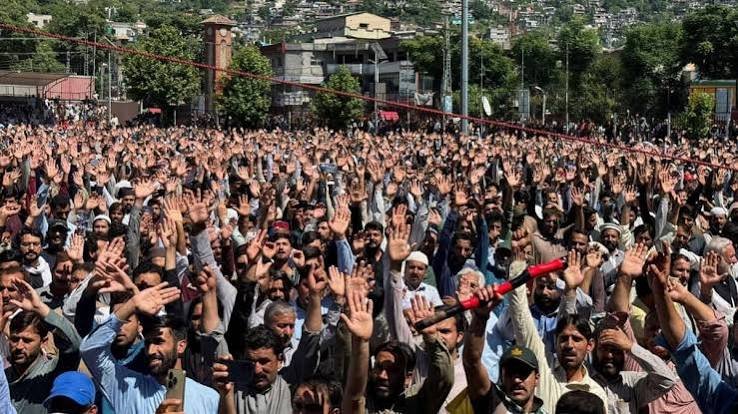
The elections are taking place amid one of the largest protest movements witnessed in the region in recent years. Demonstrators have accused the Pakistani administration of economic neglect, political repression, and denying the people of PoK meaningful participation in governance.
Following weeks of unrest that reportedly left several people dead and hundreds injured, Pakistan’s Punjab province deployed approximately 14,000 police personnel to maintain law and order during the polling process.
Major Political Parties in the Fray
The contest is primarily between Pakistan’s major political parties:
- Pakistan Muslim League-Nawaz (PML-N)
- Pakistan Peoples Party (PPP)
- Istehkam-e-Pakistan Party (IPP)
Of the 13 constituencies voting in the first phase, Kotli district accounts for 135 candidates contesting six seats, while voters in Mirpur and Bhimber will decide the remaining seven constituencies.
JAAC Protest Movement Dominates Political Landscape
The elections come after months of demonstrations led by the Jammu Kashmir Joint Awami Action Committee (JAAC), which has demanded:
- Subsidised wheat flour
- Lower electricity tariffs
- Greater political rights
- Abolition of the 12 Assembly seats reserved for refugees who settled in Pakistan after 1947
JAAC has called for a complete boycott of the elections, describing the polling exercise as a “sham” and alleging that the outcome has already been decided. The organization urged voters to stay away from polling stations in protest.
Last month, Islamabad declared JAAC a banned organization, accusing it of planning violence and disturbing public order. JAAC has strongly rejected the allegations, maintaining that its movement remains peaceful.
PTI Boycotts Polls
Former Prime Minister Imran Khan’s Pakistan Tehreek-e-Insaf (PTI), which emerged as the largest party in the 2021 PoK elections, has also decided to boycott the elections in solidarity with the protest movement.
The boycott has raised concerns regarding voter turnout and the credibility of the electoral process.
Opposition Alleges ‘Election Engineering’
Opposition parties and political activists have accused Pakistan’s military establishment of influencing the electoral process through what they describe as “election engineering.”
Pakistani authorities have rejected these allegations, insisting that the elections are being conducted fairly and in accordance with the law.
Assembly Composition
The PoK Legislative Assembly consists of 53 members, including:
- 45 directly elected representatives
- 8 reserved seats for women, technocrats, and religious scholars
Among the directly elected seats, 12 are reserved for refugees from Jammu and Kashmir who settled in Pakistan after 1947, an arrangement that continues to remain one of the region’s most contentious political issues.
The outcome of the staggered elections is expected to shape the political landscape of Pakistan-occupied Kashmir amid growing public discontent, calls for greater autonomy, and continued scrutiny over the transparency and fairness of the electoral process.