

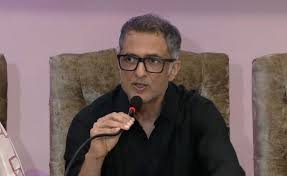
Srinagar, September 9, 2026 : Bollywood actor-producer Sanjay Suri has called for the creation of a strong and formal cinematic infrastructure in Jammu and Kashmir, saying the region’s rich creative potential cannot be sustained through occasional film releases alone.

Speaking on the sidelines of the first International Film Festival of Jammu & Kashmir (IFFJK) in Srinagar on Wednesday, Suri said the region needs an ecosystem that can provide aspiring filmmakers with professional training, mentorship, workshops and opportunities to develop their careers.
🎬 ‘Festival Is Only the Beginning’
Suri, who was born in Kashmir, said the IFFJK represents an important beginning and could help place Jammu and Kashmir on the wider cinematic map.
Drawing comparisons with international cinema showcases in places such as Dubai and Qatar, he said the region’s young talent needs institutional support to turn its ambitions into sustainable careers.
He suggested establishing film workshops or a dedicated film school in Jammu and Kashmir, saying such institutions could provide formal training while exposing young filmmakers to broader perspectives.
Suri was attending the festival where his film ‘Main Vaapas Aaunga’, directed by Imtiaz Ali, was screened.
🎥 ‘One Film Cannot Create an Ecosystem’
Suri emphasised that building a sustainable film industry would require much more than producing an occasional movie.
He said Jammu and Kashmir needs an entire ecosystem involving filmmakers, actors, technicians, writers, mentors and supporting businesses.
Using the growth of cafes as an example, Suri noted that there were relatively few cafes in the region several years ago, but local entrepreneurs helped create an expanding ecosystem.
He suggested a similar approach could help establish a stronger creative and cinematic industry.
🌟 Local Talent Needs Mentorship
The actor-producer stressed the importance of connecting emerging local filmmakers with experienced directors and professionals.
According to Suri, local stories and voices will find greater space when young talent gets opportunities to train, collaborate and learn from established filmmakers such as Imtiaz Ali.
He also pointed to the opportunities created by the digital era, where young people are increasingly involved in vlogging, tourism promotion, filmmaking and storytelling.
Suri said stories already exist across Jammu and Kashmir, including romantic and light-hearted narratives, and the challenge is to provide aspiring storytellers with the right platforms and professional support.
❤️ ‘Main Vaapas Aaunga’ Connects Across Generations
Speaking about Main Vaapas Aaunga, Suri described the film as a love story set against the backdrop of undivided India during Partition.
He said the story continues to resonate with audiences because its themes of losing one’s home, identity, land and life remain deeply human and universal.
Suri described the film as a rare kind of story that comes along only once in several decades.
🎭 Sharvari: Stories Matter More Than Language
Actress Sharvari, when asked about the possibility of working in a Kashmiri film, said that compelling stories remain the most important factor for actors.
She said regional cinema offers rich narratives and exciting opportunities, with language not necessarily being a barrier for performers.
Sharvari said she would welcome the opportunity to work in Kashmiri cinema if presented with a strong story.
🎬 Sharvari Recalls ‘Magical’ Experience
Reflecting on her experience working on Main Vaapas Aaunga, Sharvari described the project as a memorable creative experience.
She said it was her first collaboration with Imtiaz Ali, as well as with co-star Vedant, Sanjay Suri and the wider team.
The actress said portraying a character from a different era required her to embrace distinct costumes, body language and a completely different world, making the experience creatively fulfilling.
She added that she has long admired Imtiaz Ali’s work and considered the opportunity a major milestone.
🌄 A Bigger Opportunity for J&K Cinema
The discussions at IFFJK have once again highlighted Jammu and Kashmir’s potential as a destination for filmmaking, storytelling and creative careers.
With its landscapes, cultural diversity and growing interest among young storytellers, the region could develop a stronger film ecosystem if supported by professional training institutions, infrastructure and sustained industry collaboration.